Kit shows you
A memory answers in words by default. You ask, Kit finds the memories that bear on the question, and the agent you are working with writes you a paragraph. For one fact, that is right.
But much of what people ask a memory is not one fact. Who is this person to me? When did this project go quiet? Who keeps turning up alongside this client? Those are questions about shape, and a paragraph is a poor way to see a shape.
Who is this?
Ask Kit about a person, a company or a place, and it now answers with a card.
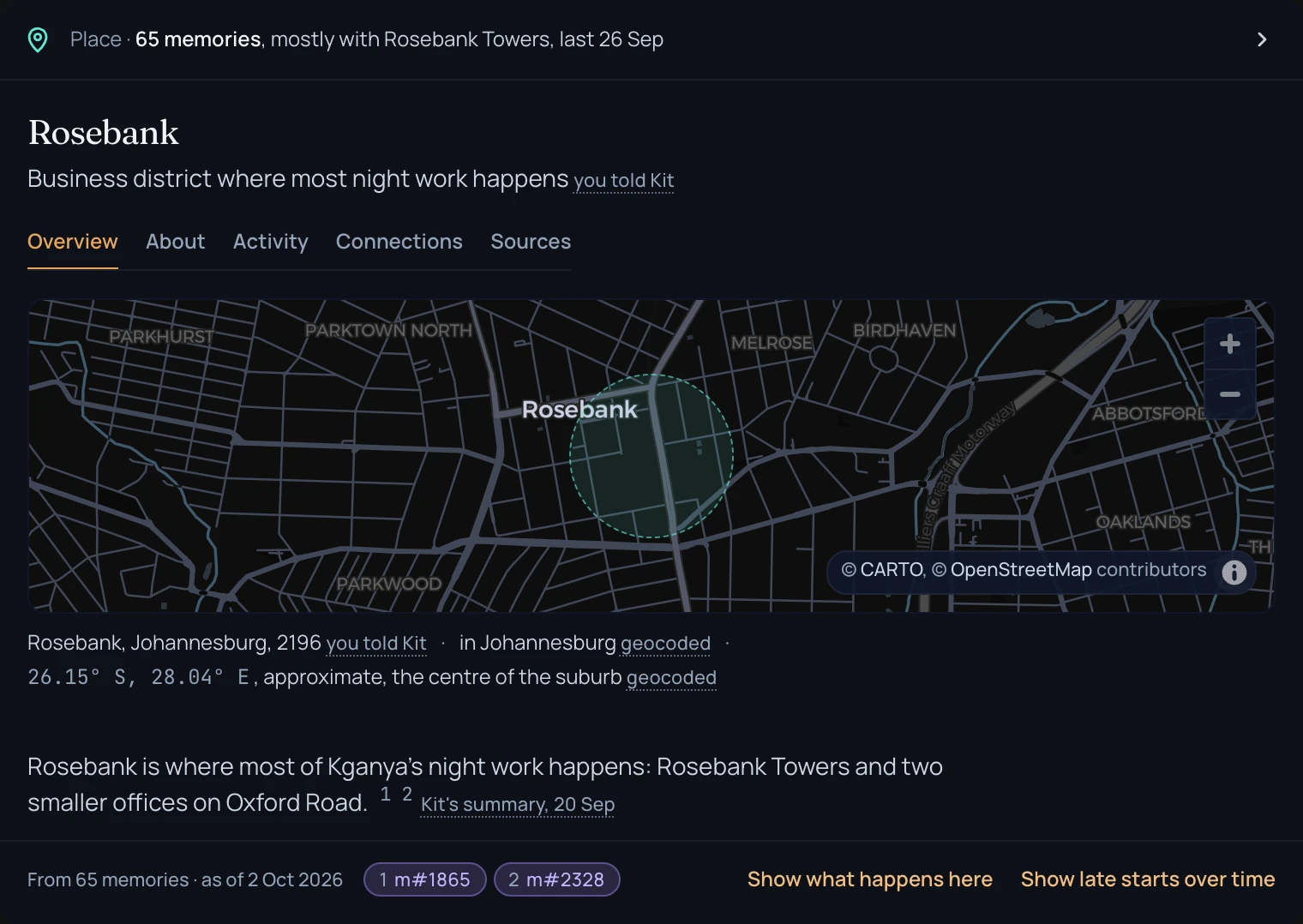
Say Ben runs a facilities business and asks about Lerato. The card opens small: her name, the line that says who she is to him, one picture and one sentence worth reading. The picture depends on what the card is about. A person gets the people and companies they are tied to. A company gets its rhythm, when it comes up and when it goes quiet. A place gets a map. Everything else is one step away, in tabs.
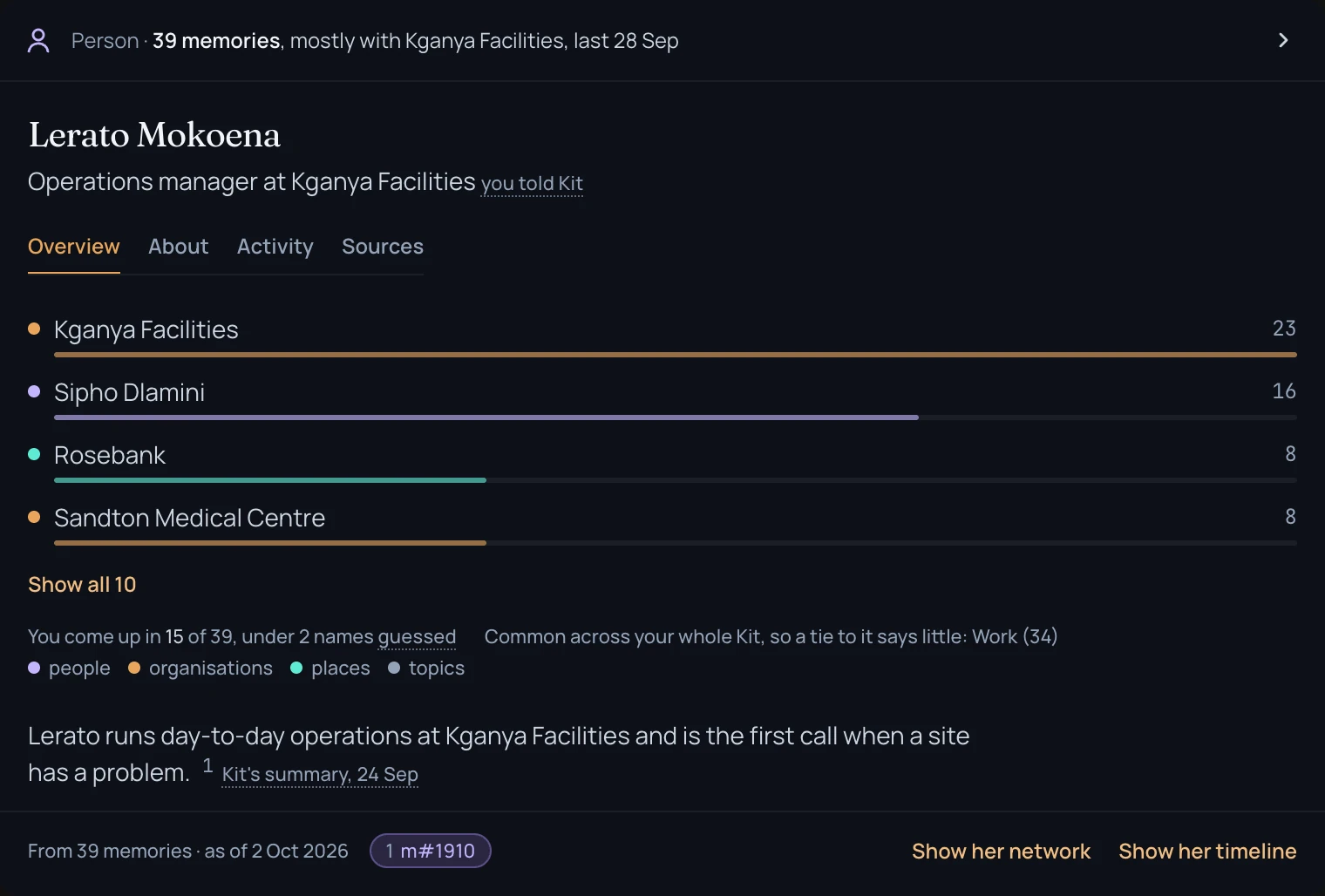
Behind the card is a summary Kit writes for itself once it has heard about someone a few times, and rebuilds as new memories arrive. What you told Kit directly is kept apart from what Kit worked out. Ben said Lerato is his operations manager, so the card says he said so. Kit found her email address on his mail, so the card says that instead.
Show me
The second thing is a question about the memory itself. Show me the last year with this client. Show me who comes up with whom.
Kit has eight ways to answer: a timeline, a series over time, a network, a breakdown, threads, what changed, themes, or a plain table.
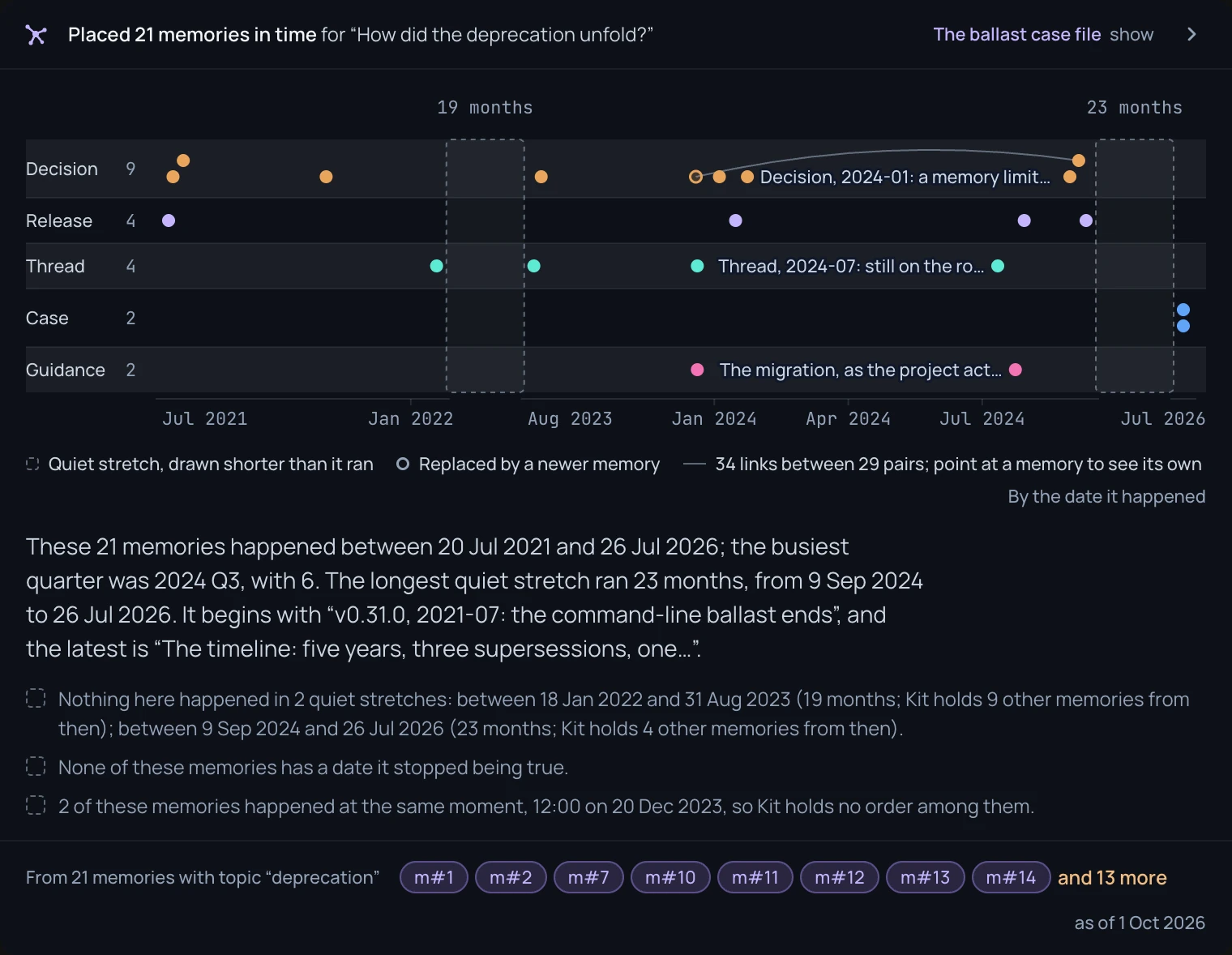
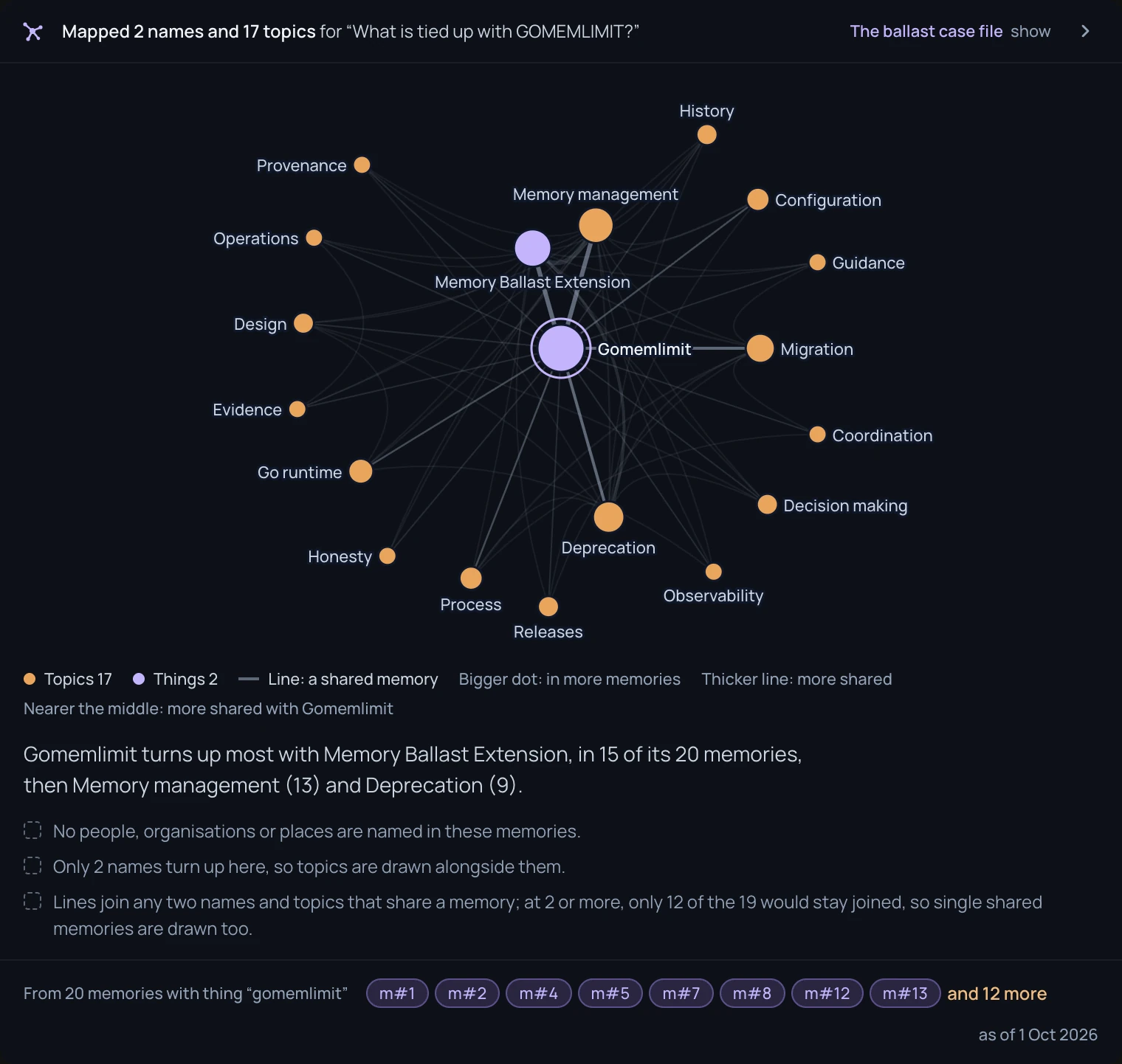
One rule sits under all eight. The agent chooses the view and what to look at. Kit does the counting. Every number, date and link in a picture is computed by Kit from its own memories, never by the model. The words the agent reads come from the same code that draws the picture, so the two cannot disagree.
That matters because language models are fluent with numbers and not reliably right about them. A chart with one plausible, invented bar is worse than no chart.
What a picture owes you
A picture is more persuasive than a paragraph, so it has to be more careful.
Every part of a card leads back to the memories behind it. A memory with no date of its own is not plotted as though it happened on the day Kit learned it. When a selection is too large to draw, the timeline draws the most important part and says so.
A card is put together on Kit’s side, under the permissions of whoever asked. A key that may not read a memory does not see it counted either, and a personal detail does not reach a work session.
With Local only switched on, a place card fetches nothing, and the address stays as text. With it off, Kit is allowed to make external calls, so the card shows the map.
Where it turns up
The cards appear in the conversation, in Claude and in Kit’s own chat. Where a host cannot draw one, the same facts arrive as words. They are in Kit from version 0.2.418.
Kit does not know more than it did last month. The memories are the same ones. What changed is that Kit can lay them out where you can see them, count them itself so the count is true, and leave every mark on the page attached to the memory that put it there. Remembering was half of it. Showing what you remember, with the working visible, is the other half.
That is the work.